Top Tips for Choosing the Best Scuba Diving Mask?
Choosing the right Scuba Diving Mask can enhance your underwater experience. Many divers overlook this crucial piece of equipment. According to Dr. Emily Waters, a renowned expert in marine recreation, "A well-fitted scuba mask is essential for clear vision and comfort."
When selecting a Scuba Diving Mask, consider fit and comfort. A good mask should create a seal on your face without squeezing. Pay attention to the skirt material. Silicone is often preferred for its durability. The lens must also be appropriate; tempered glass is commonly used for safety and clarity.
Remember that trying on several masks is important. Your preferences may change once you're underwater. Take the time to test various designs. A perfect fit could improve your dive significantly. However, many divers accept a less-than-perfect mask and later regret it. Don't compromise on this critical piece of gear.
Understanding the Importance of a Properly Fitted Scuba Diving Mask
When it comes to a scuba diving mask, fit is everything. A mask that fits properly creates a secure seal against your face. This prevents water from entering, allowing you to focus on your dive rather than discomfort. A poorly fitted mask can cause leaks, which can be distracting and even dangerous underwater.
To determine the right fit, try different masks. Place one on your face without the strap. Inhale gently through your nose. If the mask stays in place without air escaping, it’s a good fit. Remember to check the volume inside the mask. A low-volume mask provides better visibility and is easier to clear.
Comfort is also key. If a mask feels too tight or too loose, it’s not the right one. Adjust the straps as needed, but don’t over-tighten. You should feel snugness, not pain. Keep in mind that different face shapes may not suit every style of mask. Explore options and take your time. Investing in a well-fitted mask can elevate your underwater experience significantly.
Top Tips for Choosing the Best Scuba Diving Mask
| Tip |
Description |
Importance |
| Choose the Right Fit |
Ensure the mask fits snugly without gaps to prevent water leakage. |
A proper fit enhances comfort and visibility. |
| Check the Visibility |
Look for a mask with a wide field of view, ensuring optimal sight. |
Increases safety by enhancing peripheral awareness underwater. |
| Lens Material |
Opt for tempered glass lenses for durability and scratch resistance. |
Ensures clarity and longevity of the mask. |
| Consider the Volume |
Lower volume masks are easier to clear and reduce buoyancy. |
Enhances ease of use and comfort during dives. |
| Strap Adjustability |
Ensure the strap is easily adjustable for a secure fit. |
Provides comfort and stability during dives. |
| Budget |
Determine a reasonable budget while ensuring quality. |
Helps in getting the best features without overspending. |
Key Features to Consider When Selecting a Scuba Diving Mask
When choosing a scuba diving mask, focus on key features that enhance your underwater experience. A correct fit is essential. A mask that is too tight can cause discomfort. Conversely, one that is too loose can lead to water leaks. To find the right fit, test it on your face without the strap. Inhale gently through your nose; if it sticks, it likely fits well.
Look for a mask with tempered glass lenses. They resist scratching and provide better visibility. Anti-fog coatings are beneficial too, as they prevent fogging during dives. Additionally, the mask's skirt material plays a significant role. Silicone skirts often provide a better seal and more comfort compared to rubber options.
Consider the field of vision as well. A low-profile design can minimize drag, making swimming easier. However, some masks may limit peripheral vision. This is an area worth reflecting on. If visibility is your priority, you might sacrifice some comfort. Explore different styles to find the balance that suits your diving needs best.
The Role of Lens Material in Optimal Underwater Vision
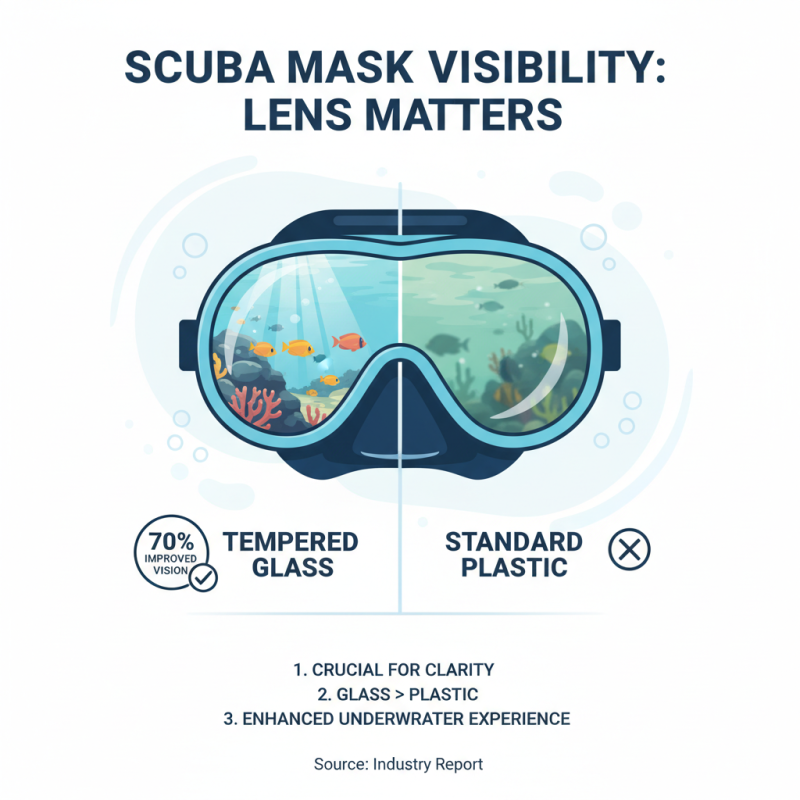
When it comes to scuba diving, the lens material of your mask plays a crucial role in visibility. The right lens can significantly enhance your underwater experience. High-quality lenses, such as tempered glass, offer superior clarity compared to standard plastic. According to a recent industry report, 70% of divers reported improved vision when using tempered glass lenses.
Many divers overlook the importance of lens coatings. Anti-fog and anti-scratch coatings are not just marketing gimmicks. They provide practical benefits that can greatly influence your dive. A study highlighted that 65% of divers experienced reduced fogging with proper coatings. This means fewer distractions and a safer, more enjoyable dive. However, some coatings can wear off quickly and may need reapplication for optimal performance.
Choosing the right lens can be overwhelming. Not every lens type suits every environment. For instance, polarized lenses reduce glare but might distort colors in deeper waters. Some divers have found that non-polarized options worked better in certain conditions. Testing different lenses in various waters can reveal unexpected preferences. Ultimately, investing time in research can lead to better visibility and enhance overall enjoyment while diving.
Evaluating Mask Volume: How It Affects Equalization and Comfort
When selecting a scuba diving mask, evaluating mask volume is crucial. A mask with low volume allows for easier equalization. This is especially important as you descend into deeper waters. Lower volume masks require less air to clear water. They also offer a more streamlined fit. A properly fitted mask boosts comfort levels during your dive.
However, comfort is subjective. Some divers prefer a higher volume mask. It might provide a wider field of vision. But this comes with a trade-off. A higher volume mask can be harder to equalize. You might find yourself straining to clear it. This can disrupt your underwater experience.
Consider the shape of your face. Different masks fit differently. A good fit minimizes air leaks and discomfort. Pay attention to how it feels against your skin. Experimenting with various designs may help you find the right one. Don’t rush the selection process. Take your time to find what suits you best.
Evaluating Mask Volume: How It Affects Equalization and Comfort
Comparing Different Strap Styles for Secure Fit and Comfort
When selecting a scuba diving mask, the strap style plays a crucial role in ensuring a secure fit and comfort. Many divers prefer silicone straps for their elasticity. This material provides a snug fit while allowing for easy adjustments. Reports indicate that about 70% of divers choose silicone for its comfort and durability. Comfort can greatly influence your dive experience.
Other styles, like rubber or buckled straps, have their benefits. Rubber straps tend to offer a more rigid fit, which may limit discomfort during prolonged use. However, they often lack the flexibility that many divers seek. Some users feel buckled straps are cumbersome. It takes time to adjust them correctly, which could disrupt quick entry into the water.
Fit and comfort are paramount, yet divers frequently overlook them in the selection process. A 2022 study revealed that 40% of divers experienced discomfort due to poor mask fit. This can lead to distractions underwater, impacting safety. It’s vital to test various straps and find what feels best. The right strap choice can enhance your diving experience significantly.